
By Scent Haus | Reading time: 6 minutes
You've spritzed on your fragrance before leaving the house, only to realise by midday that it's completely gone — or perhaps you've arrived somewhere and felt your scent was just a little too loud for the room. Either way, the fix is the same: choose the right format. Understanding the difference between eau de toilette and eau de parfum is the single most useful piece of fragrance knowledge you can have.
This guide is part of the complete Scent Haus Fragrance Guide. For a deeper look at the EDP format specifically, see our article on what is eau de parfum.
Eau de Toilette vs Eau de Parfum at a Glance
| Feature | Eau de Toilette (EDT) | Eau de Parfum (EDP) |
|---|---|---|
| Oil concentration | 5–15% | 15% and above (premium houses at 20%) |
| Typical longevity | 3–5 hours | 6–8 hours |
| Projection | Moderate, close-to-skin by afternoon | Strong through heart and base notes |
| Upfront price | Lower per bottle | Slightly higher per bottle |
| Cost per wear | Similar or higher | Similar or lower |
| Best for | Casual daytime, warm weather, gym | All-day wear, evenings, work, year-round |
The short answer: EDP wins on longevity, projection, and cost per wear. EDT wins on upfront price and subtlety in casual warm-weather situations. For most UK buyers choosing a primary everyday fragrance, EDP is the better default.

Concentration: Where the Difference Begins
Every practical distinction between EDT and EDP flows from one source: the percentage of fragrance oil dissolved in alcohol. EDT sits in the 5–15% range; EDP starts at 15% and, at premium houses like Scent Haus, reaches a full 20%.
Both formats are dissolved primarily in ethanol, with a small amount of water. The alcohol carries fragrance molecules off the skin surface as it evaporates. What EDT and EDP differ in is how much fragrance oil remains active on skin once the alcohol has fully evaporated. More oil means more longevity, more projection, and a richer overall presence.
One nuance worth knowing: the EDT range is wide. A premium EDT at 14% may perform similarly to an entry-level EDP at 15%, which is why the label alone does not tell the whole story. The quality and composition of the fragrance oil matters as much as the percentage figure.
For cosmetic product safety standards covering fragrance formulations in the UK, the CTPA provides guidance at CTPA: using your cosmetics safely.
Longevity: How Long Will It Actually Last?
The most practical difference between EDT and EDP is how long each lasts on skin. EDT delivers 3–5 hours; EDP delivers 6–8 hours. For a typical UK working day of eight to ten hours, this matters enormously:
- For commuters: EDT wearers often find their scent has faded or become very close-to-skin by early afternoon. EDP wearers generally remain fragrant through a full working day without needing to reapply.
- For social evenings: an EDT applied before heading out may be largely gone before the evening ends. An EDP applied at the same time will carry through comfortably.
Beyond format, several variables affect longevity for both EDT and EDP:
- Skin type: Oily skin retains fragrance longer because natural surface oils help bind fragrance molecules. For dry skin types, the gap between EDT and EDP performance is more pronounced — EDP combined with an unscented body lotion applied beforehand gives the fragrance something to anchor to.
- Season: Cold weather slows evaporation — both EDT and EDP last longer in UK autumn and winter than in summer.
- Formula: A formula built around heavy base notes — woods, musks, ambers — lasts longer than one composed primarily of light citrus or green top notes, regardless of whether it is EDT or EDP.
- Body temperature: Warmer-running body types naturally project fragrance more strongly, which can bring EDT closer to EDP performance levels. If fragrances consistently fade quickly on you regardless of format, EDP is almost always the right answer.
For techniques to maximise longevity for either format, see our guide to making perfume last longer.
Projection and Sillage: How Far Does It Travel?
Projection refers to how far a scent radiates from your body; sillage is the trail it leaves as you move through a room. Both favour EDP. In the first two to three hours of wear, a quality EDP typically projects 30–50cm from the body, while EDT projects 15–20cm.
The difference becomes most apparent in the base note phase. As top notes fade, EDP continues to project a clear, identifiable character through its heart and base notes. EDT at the equivalent stage often becomes very close-to-skin — present if someone leans in, but little more.
Whether this distinction matters depends entirely on context. Strong projection is welcome in social settings and evening environments. The more contained sillage of an EDT can be the more considerate choice in enclosed professional spaces — an open-plan office or a packed train carriage, for instance. Neither outcome is wrong; knowing which you want helps you choose.
Do They Actually Smell Different?
For the same fragrance name offered in both EDT and EDP, the answer is: sometimes yes, sometimes no.
Some brands simply dilute the same formula to create both formats. In these cases, EDT and EDP smell recognisably identical — the EDT reads brighter and shorter-lived at the top, the EDP richer and longer-lasting through the dry-down, but both are the same scent at different intensities.
Other brands create genuinely different formulations for each format. The EDT may foreground fresh, bright top notes suited to lighter concentration; the EDP may lean into deeper heart and base materials that reward more intensity. In these cases, choosing between EDT and EDP of the same fragrance name is genuinely a choice between two different scent experiences.
The practical lesson: if you know and love an EDT version of a fragrance, do not assume the EDP will feel the same on your skin. Test on skin before switching between formats. Our fragrance notes guide explains the note pyramid in full, which helps you understand how concentration affects what you perceive at each stage of the dry-down.
Price and Value: Which Is Worth More?
EDT typically costs 10–20% less per bottle than EDP of the same fragrance. But the upfront price is not the most useful measure of value. Consider cost per hour of fragrance wear instead:
- A 50ml EDT used at five sprays lasting four hours: roughly 200 applications and 800 hours of wear.
- A 50ml EDP used at three sprays lasting seven hours: roughly 333 applications and 2,331 hours of wear.
Even if the EDP costs 20% more upfront, the per-hour cost is dramatically lower. Over a full bottle, EDP typically represents significantly better value for anyone wearing fragrance daily. The cost-per-wear comparison is one of the most compelling practical arguments for defaulting to EDP as a primary fragrance.
At Scent Haus, all products are formulated as 20% EDP — the same standard used by many prestige maisons. Explore our men's inspired range and women's inspired perfumes, or start with samples to find your ideal profile. Our fragrance bundle deals offer additional savings at full-bottle stage.
Which to Wear and When
When EDT earns its place
- Casual daytime wear in warm or hot weather, where lighter projection suits the mood
- Gym, sport, or outdoor activities where a brief, refreshing burst of scent is all you need
- Enclosed professional environments — open-plan offices, commuter carriages — where strong projection could be inconsiderate to those around you
- Fragrance layering, used as a lighter top layer applied over a richer EDP base
When EDP is the better choice
- Full working days where reapplication is impractical — this is the primary argument for EDP over EDT for most people
- Evening and social occasions where fragrance presence is part of the experience
- Autumn and winter months, where heavier profiles and longer wear are appreciated and the denser UK air carries scent beautifully
- Any situation where you want your fragrance to remain present without having to think about it
For most UK buyers choosing a primary everyday fragrance, the decision should default to EDP. The UK climate is temperate enough year-round that even richer EDP formulas do not overwhelm, and the longevity advantage translates directly into a better daily fragrance experience. Our signature scent guide will help you narrow down which profile suits your lifestyle, regardless of which format you choose.
Our Verdict: EDT or EDP?
For most everyday UK fragrance buyers, EDP is the recommended choice. The longevity advantage — six to eight hours versus three to five — means wearing your fragrance through a full day without needing to reapply. The cost-per-wear comparison also favours EDP once you look past the upfront price.
EDT earns its place as a second bottle for specific contexts: warm weather, lighter daytime situations, or as part of a layering approach alongside a heavier EDP.
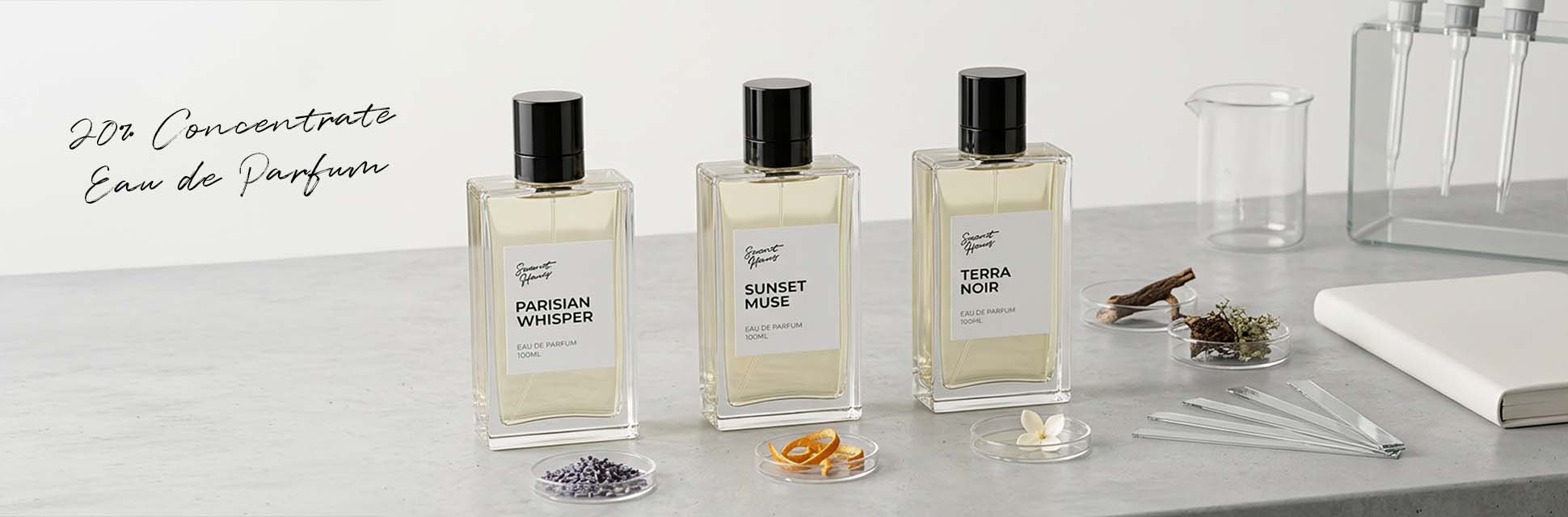
At Scent Haus, every fragrance is formulated to 20% EDP because everyday buyers should not have to choose between quality and longevity. Our range is inspired by the world's most beloved scents, crafted with full transparency about what you're wearing and why. Return to our full Fragrance Guide hub for more expert guidance on every aspect of fragrance buying. Happy scenting.


Leave a comment
This site is protected by hCaptcha and the hCaptcha Privacy Policy and Terms of Service apply.